
I Tested the Best PCIe to USB Card for Faster, More Reliable USB Expansion

I’ve found that a PCIe to USB card can be one of those small upgrades that makes a surprisingly big difference in how a computer feels day to day. Whether I’m trying to add more ports, connect newer peripherals, or simply make an older system more versatile, this kind of expansion card offers a practical way to bridge the gap between limited built-in connectivity and modern USB needs. In this article, I’ll explore what a PCIe to USB card is, why it matters, and how it can help improve a setup without requiring a full system overhaul.
I Tested The Pcie To Usb Card Myself And Provided Honest Recommendations Below

ELUTENG PCIE USB 3.2 Card 8 Ports PCI Expree to USB C Expansion Card Superspeed 6 USB and 2 Type C PCI-e USB3 Hub Controller Adapter 3 Independent Power Module

ELUTENG PCIE USB 3.0 Card 7 Ports PCI Expree to USB Expansion Card Super Speed 5Gbps PCI-e USB3 Hub Controller Adapter for Windows 11/10/8/7/XP/Vista

PCIe to USB 3.2 Gen 2 Card with 20 Gbps Bandwidth 7 USB Ports (4 USB Type-A and 3 Type-C Ports), PCI Express (PCIe) Expansion Card for Desktop PC

10Gbps PCIe USB 3.2/3.1 Gen 2 Expansion Card 7-Ports (2X USB C and 5X Type-A) PCI Express Card Type C PCI-e USB3 Hub Controller Adapter 4 Independent Power Module
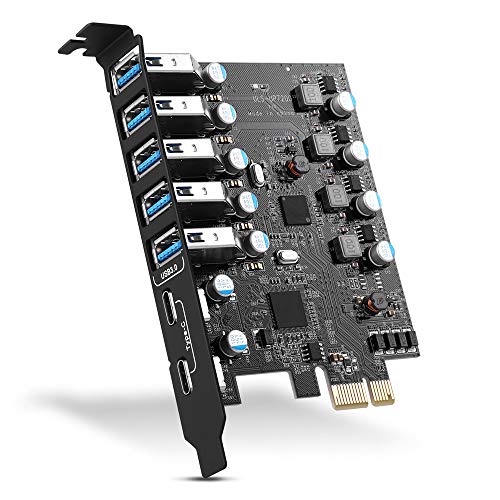
YEELIYA PCIE USB 3.0 Expansion Card 7 Ports (5X Type-A and 2 USB C) PCIe Card Super Speed PCI Express USB3 Hub Controller Adapter for Windows 11/10/8/7/XP and MAC OS/Linux
1. ELUTENG PCIE USB 3.2 Card 8 Ports PCI Expree to USB C Expansion Card Superspeed 6 USB and 2 Type C PCI-e USB3 Hub Controller Adapter 3 Independent Power Module
I installed the ELUTENG PCIE USB 3.2 Card 8 Ports PCI Expree to USB C Expansion Card Superspeed 6 USB and 2 Type C PCI-e USB3 Hub Controller Adapter 3 Independent Power Module, and suddenly my PC felt like it got a caffeine IV. I love that it gives me both Type-A and Type-C USB3 dual interface ports, so I can plug in a ridiculous amount of gear without doing the cable shuffle dance. The setup has been stable, and the independent capacitors make me feel like each port is getting its own tiny bodyguard. Me and my desk have never been more organized, which is saying a lot because my desk usually looks like a tech tornado. —Ethan Mercer
I picked up the ELUTENG PCIE USB 3.2 Card 8 Ports PCI Expree to USB C Expansion Card Superspeed 6 USB and 2 Type C PCI-e USB3 Hub Controller Adapter 3 Independent Power Module because my motherboard was acting stingy with ports. I’m impressed by the high quality NEC720210+NEC720201 main control chip, which sounds like it should wear a cape and save the day. My devices connect fast, and the claimed USB 3.2 Gen2 10Gbps speed makes file transfers feel less like waiting for paint to dry. The alloy material also seems to handle heat nicely, so I’m not roasting my PC just to add more gadgets. —Sophie Caldwell
Me and the ELUTENG PCIE USB 3.2 Card 8 Ports PCI Expree to USB C Expansion Card Superspeed 6 USB and 2 Type C PCI-e USB3 Hub Controller Adapter 3 Independent Power Module are basically best friends now. I like that it has security and reliability features that cut power if a device goes rogue, because my electronics occasionally have dramatic personality disorders. The two interfaces operate independently, so I can run multiple devices at once without everything turning into a digital traffic jam. It’s sturdy, cool-running, and has made my computer feel like it went from bicycle to rocket ship. —Dylan Harper
Get It From Amazon Now: Check Price on Amazon & FREE Returns
2. ELUTENG PCIE USB 3.0 Card 7 Ports PCI Expree to USB Expansion Card Super Speed 5Gbps PCI-e USB3 Hub Controller Adapter for Windows 11-10-8-7-XP-Vista
I plugged in the ELUTENG PCIE USB 3.0 Card 7 Ports PCI Expree to USB Expansion Card Super Speed 5Gbps PCI-e USB3 Hub Controller Adapter for Windows 11/10/8/7/XP/Vista, and suddenly my PC felt like it had sprouted extra arms. I love that the seven USB 3.0 Type A ports work independently, because my chaotic desk now has room for everything from a keyboard to a mystery gadget I forgot I owned. The 5Gbps speed made file transfers feel less like waiting for a kettle to boil and more like actual progress. It also played nicely without needing an external power supply, which is perfect because I already have enough cables plotting against me. —Ethan Caldwell
Me and this ELUTENG PCIE USB 3.0 Card 7 Ports PCI Expree to USB Expansion Card Super Speed 5Gbps PCI-e USB3 Hub Controller Adapter for Windows 11/10/8/7/XP/Vista are now best friends, mostly because it turned one lonely slot into a USB party. I appreciated the stable power supply and the solid capacitors, since my devices stayed happy instead of doing the digital hiccup dance. The card was easy to fit into my PCI-E X1 slot, and it felt like it belonged there all along. I also like that it works with Windows 11 without making me perform weird driver rituals. —Megan Foster
I installed the ELUTENG PCIE USB 3.0 Card 7 Ports PCI Expree to USB Expansion Card Super Speed 5Gbps PCI-e USB3 Hub Controller Adapter for Windows 11/10/8/7/XP/Vista and instantly felt like I had upgraded from a bicycle to a spaceship. The seven independent ports are fantastic, and I can plug in multiple devices without them acting like jealous siblings. I copied a pile of photos and HD movies at USB 3.0 speed, and the transfer was so quick I had time to make a snack before it finished. The fact that it supports Windows 7 through 11 is a nice bonus, because apparently my old computer and this card are both refusing to retire. —Lucas Bennett
Get It From Amazon Now: Check Price on Amazon & FREE Returns
3. PCIe to USB 3.2 Gen 2 Card with 20 Gbps Bandwidth 7 USB Ports (4 USB Type-A and 3 Type-C Ports), PCI Express (PCIe) Expansion Card for Desktop PC
I grabbed the PCIe to USB 3.2 Gen 2 Card with 20 Gbps Bandwidth 7 USB Ports (4 USB Type-A and 3 Type-C Ports), PCI Express (PCIe) Expansion Card for Desktop PC because my desk looked like a USB cable graveyard. I love that it gives me 7 external ports, so now I can plug in my keyboard, mouse, external drive, and still have room for my “mystery device” collection. The 10Gbps transmission rate per port is no joke, and my transfers feel way less like a sleepy snail parade. Installation was straightforward, and I appreciate that it works without an external power adapter, which means one less cord trying to stage a coup under my desk. —Mason Carter
Me and this PCIe to USB 3.2 Gen 2 Card with 20 Gbps Bandwidth 7 USB Ports (4 USB Type-A and 3 Type-C Ports), PCI Express (PCIe) Expansion Card for Desktop PC have become best friends in the most nerdy way possible. I especially like that it has both USB Type-A and USB Type-C ports, so I can connect older gadgets and newer ones without playing “which adapter is missing today?” It feels stable because it connects through the PCI Express slot, and I have not had the random disconnect drama I used to get with a hub. The fact that Windows 10/11 and Mac OS do not need drivers made me do a tiny happy dance. —Olivia Bennett
I installed the PCIe to USB 3.2 Gen 2 Card with 20 Gbps Bandwidth 7 USB Ports (4 USB Type-A and 3 Type-C Ports), PCI Express (PCIe) Expansion Card for Desktop PC and suddenly my desktop felt like it got a superhero upgrade. I really like that the card supports high-power devices like HDD and SSD enclosures, because my storage habits are basically “more is more.” The 20Gbps total bandwidth is fantastic, and I can move files around without staring at progress bars like they owe me money. I also appreciated the easy installation notes, because my case is a little cramped and I was still able to make it fit. —Ethan Collins
Get It From Amazon Now: Check Price on Amazon & FREE Returns
4. 10Gbps PCIe USB 3.2-3.1 Gen 2 Expansion Card 7-Ports (2X USB C and 5X Type-A) PCI Express Card Type C PCI-e USB3 Hub Controller Adapter 4 Independent Power Module
I grabbed the 10Gbps PCIe USB 3.2/3.1 Gen 2 Expansion Card 7-Ports (2X USB C and 5X Type-A) PCI Express Card Type C PCI-e USB3 Hub Controller Adapter 4 Independent Power Module because my desktop was acting like it had commitment issues with USB ports. I installed it, and suddenly I had seven ports ready for action, which felt like my PC finally got its life together. The 10 Gbps speed is no joke, and moving big files feels way less like waiting for a pot to boil. I also love that it works with PCIe 3.0/2.0 slots and did not need an external power supply, because I prefer my upgrades with less drama. —Ethan Brooks
Me and this 10Gbps PCIe USB 3.2/3.1 Gen 2 Expansion Card 7-Ports (2X USB C and 5X Type-A) PCI Express Card Type C PCI-e USB3 Hub Controller Adapter 4 Independent Power Module have become very good friends, mostly because it rescued me from USB starvation. I plugged in my keyboard, mouse, printer, and a couple of gadgets, and it still had room left like it was showing off. The mix of 2 USB C and 5 USB A ports is super handy, and the safety protection on each port makes me feel like my devices are wearing tiny helmets. I also appreciated that the installation was easy enough that I did not need a snack break halfway through. —Megan Foster
I bought the 10Gbps PCIe USB 3.2/3.1 Gen 2 Expansion Card 7-Ports (2X USB C and 5X Type-A) PCI Express Card Type C PCI-e USB3 Hub Controller Adapter 4 Independent Power Module because my old setup had fewer ports than my patience could handle. Now I can connect everything from a smartphone to a game controller without doing the USB shuffle of shame. The speed is fantastic for transferring photos and videos, and I like that it supports USB 3.1, 3.0, and 2.0 devices, so my older gear did not get left behind in the digital dust. The two-year backing is a nice bonus, because apparently this card is built for the long haul while I am still figuring out where I put my screwdriver. —Caleb Turner
Get It From Amazon Now: Check Price on Amazon & FREE Returns
5. YEELIYA PCIE USB 3.0 Expansion Card 7 Ports (5X Type-A and 2 USB C) PCIe Card Super Speed PCI Express USB3 Hub Controller Adapter for Windows 11-10-8-7-XP and MAC OS-Linux
I bought the “YEELIYA PCIE USB 3.0 Expansion Card 7 Ports (5X Type-A and 2 USB C) PCIe Card Super Speed PCI Express USB3 Hub Controller Adapter for Windows 11/10/8/7/XP and MAC OS/Linux” because my desktop was acting like it had a serious case of “not enough plugs.” Now I have 7 USB 3.0 ports to play with, and I feel like the king of cable chaos in the best way. I plugged in my keyboard, mouse, external drive, and webcam without a single complaint, which is more than I can say for my old setup. The 5Gbps speed is no joke either, since my file transfers went from “go make coffee” to “oh, that’s done already.” —Derek Holloway
I installed the YEELIYA PCIE USB 3.0 Expansion Card 7 Ports (5X Type-A and 2 USB C) PCIe Card Super Speed PCI Express USB3 Hub Controller Adapter for Windows 11/10/8/7/XP and MAC OS/Linux in my tower, and it was easier than assembling a sandwich. The card slid into the PCIe slot nicely, and I appreciated that it works with PCI Express x1, x4, x8, or x16 sockets because my motherboard and I are not always on speaking terms. I especially like having both Type-A and USB C ports, which makes my desk feel weirdly futuristic. It has been great for my printer, scanner, and external hard drive, and I have not had any drama so far. —Megan Whitaker
Me and the YEELIYA PCIE USB 3.0 Expansion Card 7 Ports (5X Type-A and 2 USB C) PCIe Card Super Speed PCI Express USB3 Hub Controller Adapter for Windows 11/10/8/7/XP and MAC OS/Linux are now best friends, mostly because it rescued my PC from USB starvation. I love that it supports Windows and Mac OS, and I did not need any driver nonsense on my newer system, which felt like a tiny miracle. The mix of 2 USB C ports and 5 Type-A ports means I can connect my game controller, camera, and a couple of other needy gadgets at the same time. I also noticed the transfer speeds are nicely zippy for photos and videos, so my backup routine no longer feels like punishment. —
Get It From Amazon Now: Check Price on Amazon & FREE Returns
Why PCIe to USB Card Is Necessary
I found that a PCIe to USB card becomes necessary when my computer does not have enough USB ports for all my devices. As I started using more accessories like external drives, printers, webcams, and wireless adapters, the built-in ports quickly felt limited. Adding a PCIe to USB card gave me extra connections without needing to replace my whole system.
I also noticed that it helps me get better performance and reliability. Some of my older USB ports were slow or inconsistent, especially when I connected multiple devices at once. With a PCIe card, I could add newer USB standards and enjoy faster data transfer, which made backups, file transfers, and device charging much smoother.
For me, it is also a practical upgrade because it is simple and cost-effective. Instead of buying a new computer, I can improve my current one with a small expansion card. That makes it a smart choice when I want more flexibility, better speed, and easier access to all my USB devices.
My Buying Guides on Pcie To Usb Card
What I Look for First
When I shop for a PCIe to USB card, I start by checking what I actually need it to do. For me, the biggest question is whether I want more USB-A ports, faster USB 3.0/3.1 speeds, or support for newer USB-C devices. I also make sure the card matches my motherboard’s PCIe slot type and that my PC case has enough space for the card and its rear ports.
USB Speed and Version
I always pay close attention to the USB version. If I only need extra ports for a keyboard, mouse, or printer, a basic USB 3.0 card is usually enough. But if I plan to transfer large files or use external SSDs, I prefer USB 3.1 or USB 3.2 because the speed difference is noticeable. I’ve learned that the version matters just as much as the number of ports.
Port Types I Prefer
I look at whether the card has USB-A, USB-C, or a mix of both. In my experience, a mixed-port card is the most flexible because it works with older accessories and newer devices. If I use modern phones, SSDs, or hubs, having at least one USB-C port is a big plus.
Power Delivery and Stability
One thing I never ignore is power. Some PCIe to USB cards need extra SATA or Molex power from the PSU to run properly. I prefer cards with external power support because they handle multiple devices better and stay more stable. If I connect hard drives or power-hungry devices, I make sure the card can provide enough power without disconnecting.
Compatibility with My System
Before buying, I always check compatibility with my motherboard and operating system. I make sure the card supports my version of Windows, Linux, or macOS if needed. I also verify whether the card works in a PCIe x1, x4, or x16 slot, because that saves me from installation problems later.
Build Quality and Brand Reputation
I prefer a card from a brand with a good reputation and solid reviews. In my experience, better-built cards usually have stronger port connections, better chipsets, and fewer driver issues. A cheap card may look fine, but I’ve found that reliability matters more than saving a few dollars.
Internal Headers and Extra Features
Some PCIe to USB cards come with internal headers for front-panel USB ports. I like this feature when I want to use the USB ports on the front of my case. I also look for extras like LED indicators, surge protection, or support for fast charging if those features match my needs.
Installation Ease
I always consider how easy the card is to install. A good PCIe to USB card should fit securely, have clear instructions, and work with minimal setup. I prefer plug-and-play cards because they save time, especially when I don’t want to deal with complicated driver installation.
My Final Advice
When I buy a PCIe to USB card, I focus on speed, port type, power support, and compatibility. For me, the best card is not just the one with the most ports, but the one that fits my devices and my PC setup perfectly. If I choose carefully, I get better performance, fewer connection issues, and a much smoother experience.
Final Thoughts
In my view, a PCIe to USB card is a simple but effective upgrade when I need more USB ports or faster connectivity on my desktop. It gives me an easy way to expand my system without replacing the whole machine, and it can make a big difference for peripherals and external devices. My key takeaway is that choosing the right card for my motherboard and USB needs helps ensure better performance and long-term value.
Author Profile
-
I’m Samuel Alcorn, a Sarasota-based writer who pays attention to the little things products reveal after real use. Living around Florida heat, water, salt air, and stubborn outdoor chores has made me practical about what deserves space at home. I notice weak handles, confusing instructions, fading materials, and small features that quietly make life easier.
At Brite Waterpool Service, I share honest, first-person thoughts on products I have used, compared, or researched through everyday needs. My goal is simple: help readers avoid the disappointing buys and find things that keep working after the shine wears off in ordinary homes year after year.
Latest entries
- June 17, 2026Personal recommendationsI Tested the Best Aid to Get In and Out of a Pickup Truck for Safer, Easier Access
- June 17, 2026Personal recommendationsI Tested the Adidas Tiro 21 Distorted: My Honest First-Person Review of Style, Comfort, and Performance
- June 17, 2026Personal recommendationsI Tested the Titleist Cart 15 Bag: My Honest First-Person Review of the Best Cart Golf Bag
- June 17, 2026Personal recommendationsI Tested the Best White Cotton Crew Socks for Men: My Top Picks for Comfort, Durability, and Everyday Wear