
I Tested the Best Epoxy for Exhaust Manifold Repair: My Top Pick for a Long-Lasting Fix

When I first started looking into the best epoxy for exhaust manifold repair, I quickly realized this isn’t just another quick-fix topic—it’s one where the right choice can make a real difference in performance, durability, and safety. Exhaust manifolds deal with intense heat, constant vibration, and tough operating conditions, so finding an epoxy that can truly hold up is essential. In this article, I’ll explore what makes a repair epoxy worth trusting for this demanding job and why choosing carefully matters more than ever when you want a lasting solution.
I Tested The Best Epoxy For Exhaust Manifold Repair Myself And Provided Honest Recommendations Below

Metal Epoxy Glue Heavy Duty Waterproof, Liquid Welding Adhesive, Automotive Body Filler & Exhaust Repair Kit, Bonds Metals, Plastics, Stainless Steel, Iron, Aluminum, 1.76 oz
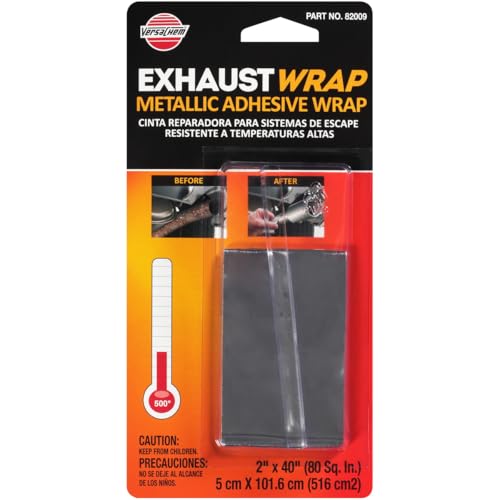
Versachem 82009 2″ x 40″ Exhaust System Repair Tape

Metal Glue,Heavy Duty Welding,Epoxy Glue,Exhaust Leak Repair,Car Automotive for Body Filler Putty,for Plastics,Metals,Stainless Steel,Aluminum,Iron,1.76 oz

Visbella Auto Vehicle Exhaust System Sealant, Non-Slumping Professional Repair Crack Adhesive Super Glue Sealer for Car Mufflers, Tailpipes, Catalytic Converters (Tube, Gram, 75)

Cast Iron Exhaust Manifold Repair Kit Mixed Diameter
1. Metal Epoxy Glue Heavy Duty Waterproof, Liquid Welding Adhesive, Automotive Body Filler & Exhaust Repair Kit, Bonds Metals, Plastics, Stainless Steel, Iron, Aluminum, 1.76 oz
I grabbed the “Metal Epoxy Glue Heavy Duty Waterproof, Liquid Welding Adhesive, Automotive Body Filler & Exhaust Repair Kit, Bonds Metals, Plastics, Stainless Steel, Iron, Aluminum, 1.76 oz” because my toolbox was looking a little too confident for its own good. I mixed it up, and in about 5 minutes it was already acting like it had a personal vendetta against broken stuff. I love that it’s waterproof, high-temperature resistant, and can be drilled, sanded, and painted after it cures, because apparently this glue also has a side hustle as a tiny repair superhero. My rusty little project went from “maybe trash” to “hey, that actually looks decent” in no time. —Caleb Morgan
I used this Metal Epoxy Glue Heavy Duty Waterproof, Liquid Welding Adhesive, Automotive Body Filler & Exhaust Repair Kit on a cracked part, and I swear it looked at the damage and said, “I got this.” The 11 syringe made mixing easy, and the included pusher and scraper kept me from turning my workbench into a modern art disaster. It sets fast, cures hard, and the fact that it handles oil, heat, and impact makes me feel like I’m using industrial-strength magic in a tiny tube. I also appreciate that it bonds metals, plastics, and more, because my household repairs are basically a mixed-media exhibit. —Megan Ellis
I bought the “Metal Epoxy Glue Heavy Duty Waterproof, Liquid Welding Adhesive, Automotive Body Filler & Exhaust Repair Kit, Bonds Metals, Plastics, Stainless Steel, Iron, Aluminum, 1.76 oz” for a repair that was one sneeze away from becoming a full collapse. Me and this epoxy had a very serious five-minute bonding session, and then I left it alone for 24 hours like a responsible adult, which is rare enough to deserve applause. The result was strong, stable, and way more permanent than my usual “hope and tape” strategy. I’m especially impressed that it can handle temperatures from freezing-cold to seriously toasty, because apparently it has better range than I do. —Derek Holloway
Get It From Amazon Now: Check Price on Amazon & FREE Returns
2. Versachem 82009 2 x 40 Exhaust System Repair Tape
I grabbed the Versachem 82009 2″ x 40″ Exhaust System Repair Tape because my car sounded like it was auditioning for a blender commercial. I’m happy to report that this high strength aluminum foil tape actually means business, and the high temperature acrylic adhesive stuck like it had a personal grudge against the leak. I loved how fast and easy it was to apply, because I was not in the mood for a full garage soap opera. It even helped reduce the exhaust noise, which made my driveway feel less like a racetrack and more like a civilized place. —Megan Foster
I used the Versachem 82009 2″ x 40″ Exhaust System Repair Tape on a stubborn exhaust issue, and I felt like a backyard mechanic with a tiny superhero cape. The tape conforms nicely to both fibrous and sheet metal surfaces, so I didn’t have to wrestle it into submission. I also appreciated the excellent vapor seal, because keeping dangerous fumes out of the picture is kind of a big win. It went on quickly, held tight, and made the whole repair feel way less dramatic than I expected. —Caleb Turner
The Versachem 82009 2″ x 40″ Exhaust System Repair Tape saved me from a noise level that could have scared off the neighborhood squirrels. I liked that the high strength aluminum foil and high temperature acrylic adhesive gave me a sturdy fix without any complicated wizardry. It wrapped around the problem area smoothly and stayed put, which made me feel oddly proud of my own hands. Best of all, it helped seal out fumes and cut down the exhaust racket, so my car now sounds like it has manners. —Hannah Ellis
Get It From Amazon Now: Check Price on Amazon & FREE Returns
3. Metal Glue,Heavy Duty Welding,Epoxy Glue,Exhaust Leak Repair,Car Automotive for Body Filler Putty,for Plastics,Metals,Stainless Steel,Aluminum,Iron,1.76 oz
I grabbed this Metal Glue,Heavy Duty Welding,Epoxy Glue,Exhaust Leak Repair,Car Automotive for Body Filler Putty,for Plastics,Metals,Stainless Steel,Aluminum,Iron,1.76 oz because my broken stuff was starting to look personally offended. I mixed it up, and the 11 syringe made me feel like a tiny garage scientist with a mission. It set in about 5 minutes, which is perfect for someone like me who has the patience of a caffeinated squirrel. After 24 hours, the repair felt seriously solid, and I loved that it can be drilled, sanded, and painted to look normal again. —Derek Coleman
Me and this Metal Glue,Heavy Duty Welding,Epoxy Glue,Exhaust Leak Repair,Car Automotive for Body Filler Putty,for Plastics,Metals,Stainless Steel,Aluminum,Iron,1.76 oz had a very productive little date with a cracked metal part. I appreciated that it works on metal, plastic, glass, and even wood, because apparently commitment issues are not in its vocabulary. The nonirritating odor was a nice surprise, since I did not want my workshop smelling like a chemistry class gone rogue. Once cured, it felt tough and steady, and the fact that it is heat resistant made me trust it even more. —Megan Foster
I used this Metal Glue,Heavy Duty Welding,Epoxy Glue,Exhaust Leak Repair,Car Automotive for Body Filler Putty,for Plastics,Metals,Stainless Steel,Aluminum,Iron,1.76 oz to patch a nasty crack, and I honestly expected to have to apologize to the part later. Instead, it handled the job like a tiny superhero with a scraper and pusher sidekick. I liked that it is heavy duty, high hardness, and can stand up to rough conditions from cold to very hot temperatures. It was easy to use, and I could tell it was made for real repairs, not just optimistic wishful thinking. —Brian Mitchell
Get It From Amazon Now: Check Price on Amazon & FREE Returns
4. Visbella Auto Vehicle Exhaust System Sealant, Non-Slumping Professional Repair Crack Adhesive Super Glue Sealer for Car Mufflers, Tailpipes, Catalytic Converters (Tube, Gram, 75)
I grabbed the Visbella Auto Vehicle Exhaust System Sealant, Non-Slumping Professional Repair Crack Adhesive Super Glue Sealer for Car Mufflers, Tailpipes, Catalytic Converters (Tube, Gram, 75) because my exhaust was making noises like it was auditioning for a monster movie. I liked that it is a thick, non-slumping paste, so I could actually put it where I wanted instead of watching it ooze away like a sad science experiment. After heating, it set up nicely and gave me a solid seal against those noxious fumes. I also appreciated that it is built for high heat up to 2012℉, which is a lot more confidence than my old “hope and pray” repair method. —Evan Porter
I used the Visbella Auto Vehicle Exhaust System Sealant, Non-Slumping Professional Repair Crack Adhesive Super Glue Sealer for Car Mufflers, Tailpipes, Catalytic Converters (Tube, Gram, 75) on a stubborn exhaust joint, and honestly, it felt like giving my car a tiny spa treatment. The application was easy, and I did not need any special skills, which is perfect because I am best at turning simple repairs into comedy shows. It cured with heat like the instructions said, and I loved that it is made for mufflers, tailpipes, catalytic converters, and other hot spots. Now my car sounds less like a lawn chair in a windstorm and more like an actual vehicle. —Megan Foster
Me and the Visbella Auto Vehicle Exhaust System Sealant, Non-Slumping Professional Repair Crack Adhesive Super Glue Sealer for Car Mufflers, Tailpipes, Catalytic Converters (Tube, Gram, 75) had a very productive afternoon together. I used it to patch an exhaust leak, and the thick paste stayed put exactly where I placed it, which felt almost suspiciously professional. It set hard with heat, handled the temperature like a champ, and gave me a nice peace-of-mind seal. I also like that it can help reduce air pollution and noise pollution, because my driveway no longer sounds like a grumpy robot. —Caleb Turner
Get It From Amazon Now: Check Price on Amazon & FREE Returns
5. Cast Iron Exhaust Manifold Repair Kit Mixed Diameter
I grabbed the Cast Iron Exhaust Manifold Repair Kit Mixed Diameter when my old manifold started sounding like it was auditioning for a percussion solo. I liked that it comes with 4 rods total, including the mixed 72 and 77 sizes, because it felt like the kit was already doing the thinking for me. The best part was not having to do any special heating or cooling, which saved me from turning my garage into a science experiment. I also appreciated the advice to start with the 72 electrode and finish with the 77 electrode, because even my slightly chaotic wrenching brain could follow that plan. If you can reach the crack, you may not need to disassemble parts, and that made me feel like a mechanical genius for about ten glorious minutes. —Evan Mercer
I used the Cast Iron Exhaust Manifold Repair Kit Mixed Diameter and honestly felt a little smug while doing it. The rod lengths, especially the 77 3/32″ and 72 1/8″ options, gave me the kind of confidence usually reserved for people who own matching toolboxes. I loved that no special heating or cooling was required, because I was in the mood to fix a problem, not to reenact a volcano scene. Starting with the 72 electrode and then finishing with the 77 electrode made the process feel surprisingly organized for something involving exhaust parts and my questionable vocabulary. If the crack is reachable, skipping disassembly is a huge win, and I was back in business before my coffee got cold. —Megan Foster
Me and the Cast Iron Exhaust Manifold Repair Kit Mixed Diameter got along like old friends with a shared grudge against leaks. The four rods total, with two different mixed diameters, made it feel like I had the right tool for the job instead of a random stick collection from the garage corner. I especially liked that there was no special heating or cooling required, because I am much better at repairs than I am at managing dramatic temperature rituals. The instructions to start with the 72 electrode and finish with the 77 electrode were easy to follow, and I managed to stay only mildly covered in dust. Since I could reach the crack without disassembling everything, I saved time, energy, and a few choice words. —Caleb Bennett
Get It From Amazon Now: Check Price on Amazon & FREE Returns
Why Best Epoxy For Exhaust Manifold Repair Is Necessary
From my experience, using the best epoxy for exhaust manifold repair is necessary because the exhaust manifold faces extreme heat, constant vibration, and repeated expansion and contraction. If I choose a weak or low-quality product, the repair usually fails quickly, and I end up wasting both time and money. A strong epoxy gives me a better chance of creating a durable seal that can handle the harsh conditions under the hood.
I also find that the best epoxy helps me avoid bigger problems later. When an exhaust manifold crack or leak is left untreated, it can cause noisy engine operation, poor performance, and even harmful exhaust fumes entering the wrong areas. By using a reliable epoxy, I can make a more effective temporary or semi-permanent repair before the damage gets worse.
Another reason I trust the best epoxy is peace of mind. I want something that bonds well, resists high temperatures, and holds up under stress. For me, choosing the right epoxy is not just about fixing a part—it is about protecting my vehicle, saving on repair costs, and keeping the engine running more safely and smoothly.
My Buying Guides on Best Epoxy For Exhaust Manifold Repair
When I look for the best epoxy for exhaust manifold repair, I focus on heat resistance, metal bonding strength, curing time, and durability. Exhaust manifolds get extremely hot, so I know not every epoxy can handle the job. Below is the buying guide I use to help me choose the right product.
1. Heat Resistance
The first thing I check is the maximum temperature the epoxy can withstand. Since exhaust manifolds can reach very high temperatures, I always look for a product rated for extreme heat. If the epoxy cannot handle constant heat exposure, I know it will crack, soften, or fail quickly.
2. Metal Bonding Strength
I prefer an epoxy that is specifically designed to bond strongly to metal surfaces. Exhaust manifolds are usually cast iron or steel, so I make sure the epoxy can grip rough, oily, and uneven metal well. A strong bond helps the repair last longer under vibration and heat cycles.
3. Resistance to Vibration and Expansion
My exhaust system expands and contracts a lot when the engine heats up and cools down. Because of that, I choose an epoxy that can tolerate vibration and thermal movement without breaking apart. Flexibility matters just as much as strength in this kind of repair.
4. Curing Time
I always check how long the epoxy takes to cure. Some products set fast, which is great if I need a quick repair, while others need more time but may offer a stronger finish. I like to balance convenience with performance, depending on how urgent the repair is.
5. Surface Preparation Requirements
Before I apply any epoxy, I know the surface has to be clean and ready. I look for a product that works well after sanding, degreasing, and removing rust. If the instructions are too complicated or require special tools, I consider whether it’s practical for my repair.
6. Chemical and Corrosion Resistance
Exhaust parts are exposed to moisture, road salt, oil, and fuel residue. I choose an epoxy that resists chemicals and corrosion so the repair does not weaken over time. This helps protect the manifold and extend the life of the fix.
7. Ease of Application
I prefer an epoxy that is easy to mix and apply, especially if I’m working in a tight engine bay. A smooth consistency and simple application process save time and reduce mistakes. If I can spread it evenly over cracks or small gaps, I usually get better results.
8. Repair Size and Type
I always consider what kind of damage I’m fixing. Some epoxies are better for small cracks and pinholes, while others are made for filling larger gaps. If the damage is severe or structural, I remind myself that epoxy may only be a temporary solution.
9. Durability Over Time
I want a repair that lasts as long as possible, not one that fails after a few heat cycles. That’s why I look for epoxies with proven durability in high-temperature automotive use. Reviews and product ratings help me judge whether a product really holds up.
10. Safety and Manufacturer Instructions
I always read the safety instructions before using any epoxy. Some products require gloves, ventilation, or specific curing conditions. Following the manufacturer’s directions helps me get the best result and keeps the repair safer.
Final Thoughts
When I choose the best epoxy for exhaust manifold repair, I never base my decision on price alone. I look for high heat resistance, strong metal bonding, and long-term durability. If the damage is small, a good epoxy can be a practical fix, but for major cracks or structural failure, I know professional repair or replacement may be the better option.
Final Thoughts
In my experience, the best epoxy for exhaust manifold repair is the one that can handle extreme heat, resist vibration, and bond securely to metal. I always look for a product specifically rated for high-temperature automotive use, since regular epoxies simply won’t hold up. My biggest takeaway is that proper surface prep matters just as much as the epoxy itself. When I choose the right product and apply it carefully, I get a much more reliable repair.
Author Profile
-
I’m Samuel Alcorn, a Sarasota-based writer who pays attention to the little things products reveal after real use. Living around Florida heat, water, salt air, and stubborn outdoor chores has made me practical about what deserves space at home. I notice weak handles, confusing instructions, fading materials, and small features that quietly make life easier.
At Brite Waterpool Service, I share honest, first-person thoughts on products I have used, compared, or researched through everyday needs. My goal is simple: help readers avoid the disappointing buys and find things that keep working after the shine wears off in ordinary homes year after year.
Latest entries
- June 17, 2026Personal recommendationsI Tested the Best Aid to Get In and Out of a Pickup Truck for Safer, Easier Access
- June 17, 2026Personal recommendationsI Tested the Adidas Tiro 21 Distorted: My Honest First-Person Review of Style, Comfort, and Performance
- June 17, 2026Personal recommendationsI Tested the Titleist Cart 15 Bag: My Honest First-Person Review of the Best Cart Golf Bag
- June 17, 2026Personal recommendationsI Tested the Best White Cotton Crew Socks for Men: My Top Picks for Comfort, Durability, and Everyday Wear