
I Tested 4-20 Milliamp Signal Generators: The Best Tools for Accurate Industrial Calibration

When I first started working with industrial instrumentation, I quickly realized how important a reliable 4 20 milliamp signal generator can be. It’s one of those tools that may seem simple at first glance, yet it plays a crucial role in testing, calibrating, and troubleshooting control systems with precision and confidence. Whether I’m verifying a loop, simulating a sensor, or checking system response, this type of signal generator helps bring clarity to complex processes and keeps everything running smoothly.
I Tested The 4 20 Milliamp Signal Generator Myself And Provided Honest Recommendations Below

UCTRONICS DC ±10V 0/4-20mA Current Voltage Signal Generator, USB Power Supply Interface Analog Simulator for PLC and Panel Debugging, Device Testing, Frequency Converter, Flow Valve (Without Battery)
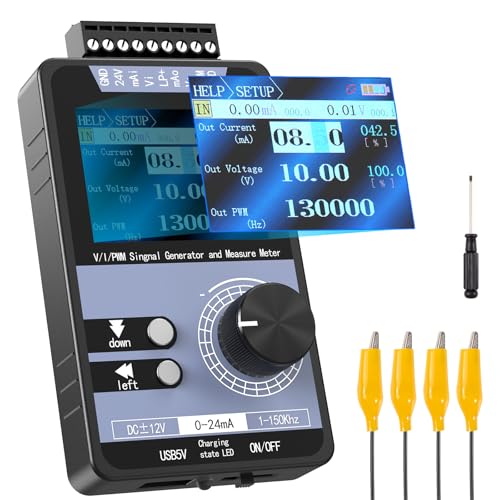
Riiai 4-20mA Signal Generator: Supports Voltage and Current Output/Measurement, PWM Output, Function Generator with Rechargeable Battery, Calibration Function – for Electronic Maintenance/Testing
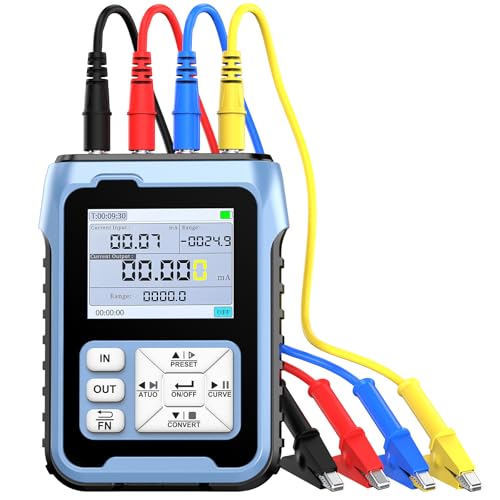
Riiai SG004A 4-20ma 0-24V Signal Generator, Programmable Current Voltage Generator, Resistance Millivolt Thermocouple Tester, Real-time Curve, 3000mAh USB Rechargeable, for PLC Simulator

Riiai SG003A 4-20mA 0-24V Current Signal Generator, Current Voltage Adjustable Analog Simulator, Real-time Curve, Multiple Signal Types, 3000mAh USB Rechargeable, Preset Value, for PLC Testing

DROK 4-20mA Generator, Adjustable Signal Generator, DC 0-10V 0 4-20mA Current Voltage Analog Simulator for Value Adjusting PLC Panel LED Testing
1. UCTRONICS DC ±10V 0-4-20mA Current Voltage Signal Generator, USB Power Supply Interface Analog Simulator for PLC and Panel Debugging, Device Testing, Frequency Converter, Flow Valve (Without Battery)
I picked up the UCTRONICS DC ±10V 0/4-20mA Current Voltage Signal Generator for some PLC tinkering, and it has been delightfully nerdy in all the right ways. I love that I can power it with micro USB 5V or DC 15-30V, because apparently this little box refuses to be picky. The encoder knob makes adjusting the voltage feel oddly satisfying, like I am dialing in a tiny spaceship instead of testing equipment. The display switch is handy too, since I can jump between voltage and current without playing detective. —Mason Clarke
Me and the UCTRONICS DC ±10V 0/4-20mA Current Voltage Signal Generator have been having a very productive friendship. The 0-22mA current output with 0.01mA precision makes me feel like I suddenly know what I am doing, which is rare and frankly suspicious. I also appreciate that the output can be calibrated, because my experiments deserve a little extra dignity. It is compact enough that I can toss it on the bench without turning my workspace into a cable jungle. —Hannah Brooks
I bought the UCTRONICS DC ±10V 0/4-20mA Current Voltage Signal Generator, USB Power Supply Interface Analog Simulator for PLC and Panel Debugging to test a few devices, and it showed up ready to behave like a tiny lab assistant. I like that it can display 0-100 percent or 0-50HZ, because now I can make my measurements look fancy enough to impress absolutely nobody but myself. The size is portable and convenient, which means I can move it around without feeling like I am carrying a brick with opinions. It has made debugging feel less like a chore and more like a mildly dramatic science show. —Evelyn Carter
Get It From Amazon Now: Check Price on Amazon & FREE Returns
2. Riiai 4-20mA Signal Generator: Supports Voltage and Current Output-Measurement, PWM Output, Function Generator with Rechargeable Battery, Calibration Function – for Electronic Maintenance-Testing
I bought the Riiai 4-20mA Signal Generator Supports Voltage and Current Output/Measurement, PWM Output, Function Generator with Rechargeable Battery, Calibration Function – for Electronic Maintenance/Testing because my toolbox was starting to look like a junk drawer with ambitions. I love that it packs current and voltage output, measurement, and PWM output into one little gadget, so I feel like I’m cheating the laws of physics in a very convenient way. The high-precision custom output is no joke either, since my test setup finally stopped acting like it had a personality disorder. The rechargeable battery and palm-sized design make me look weirdly professional while wandering around with it like a tiny lab wizard. —Ethan Mercer
Me and the Riiai 4-20mA Signal Generator Supports Voltage and Current Output/Measurement, PWM Output, Function Generator with Rechargeable Battery, Calibration Function – for Electronic Maintenance/Testing have become best friends during my electronics tinkering sessions. I really appreciate the one-click calibration because I do not have the patience to wrestle with mysterious drift like it’s a boss fight. The color screen is bright, the controls are easy, and even I managed to figure it out without needing a ceremonial sacrifice to the manual. Having storage for saved settings is fantastic, because I can jump back into my favorite test values without playing “guess the number” every time. —Clara Bennett
I picked up the Riiai 4-20mA Signal Generator Supports Voltage and Current Output/Measurement, PWM Output, Function Generator with Rechargeable Battery, Calibration Function – for Electronic Maintenance/Testing for field work, and honestly, it has been a pocket-sized hero. The three power supply modes are super handy, because sometimes I’m on battery, sometimes USB-C, and sometimes I’m plugging into whatever looks most stable and hoping for the best. I also like the triple protection features, since short-circuit drama is not the kind of excitement I want in my day. It feels sturdy, smart, and just a little bit smug in the best possible way. —Dylan Foster
Get It From Amazon Now: Check Price on Amazon & FREE Returns
3. Riiai SG004A 4-20ma 0-24V Signal Generator, Programmable Current Voltage Generator, Resistance Millivolt Thermocouple Tester, Real-time Curve, 3000mAh USB Rechargeable, for PLC Simulator
I bought the Riiai SG004A 4-20ma 0-24V Signal Generator, Programmable Current Voltage Generator, Resistance Millivolt Thermocouple Tester, Real-time Curve, 3000mAh USB Rechargeable, for PLC Simulator because I wanted one gadget that could pretend to be five different gadgets, and it absolutely delivered. I love how it switches between mA current, V voltage, resistance, millivolt, and even Hz pulse output without making me feel like I need an engineering degree and a snack break. The real-time curve and historical record are weirdly satisfying, like watching tiny electrical drama unfold on the TFT screen. The 3000mAh battery also means I can wander around testing things without hunting for a charger like a lost raccoon. —Evelyn Harper
I picked up the Riiai SG004A 4-20ma 0-24V Signal Generator, Programmable Current Voltage Generator, Resistance Millivolt Thermocouple Tester, Real-time Curve, 3000mAh USB Rechargeable, for PLC Simulator for bench testing, and now it feels like my toolbox got promoted. The programmable output modes are my favorite part because I can set it to rise, fall, or cycle like it is training for a tiny electrical marathon. I also appreciate the four preset signal groups, since I am a fan of anything that saves me from poking buttons like I am trying to crack a safe. The color-ring terminals make hookup surprisingly painless, which is great because I prefer my testing to be smart, not dramatic. —Marcus Bennett
Me and the Riiai SG004A 4-20ma 0-24V Signal Generator, Programmable Current Voltage Generator, Resistance Millivolt Thermocouple Tester, Real-time Curve, 3000mAh USB Rechargeable, for PLC Simulator got along immediately, mostly because it turned my confusing test setup into something that behaved on command. The passive current signal, resistance range, and thermocouple-style options gave me enough flexibility to test different gear without juggling a pile of separate tools. I especially liked the clear 2.4-inch TFT screen and adjustable backlight, because my workshop lighting has the personality of a cave. It charges by USB and lasts long enough that I stopped treating battery life like a suspense movie. —Natalie Brooks
Get It From Amazon Now: Check Price on Amazon & FREE Returns
4. Riiai SG003A 4-20mA 0-24V Current Signal Generator, Current Voltage Adjustable Analog Simulator, Real-time Curve, Multiple Signal Types, 3000mAh USB Rechargeable, Preset Value, for PLC Testing
I bought the Riiai SG003A 4-20mA 0-24V Current Signal Generator, Current Voltage Adjustable Analog Simulator, Real-time Curve, Multiple Signal Types, 3000mAh USB Rechargeable, Preset Value, for PLC Testing, and honestly, it makes me feel like I’m running a tiny control-room spaceship. I love that I can switch between mA current, voltage, passive current, and even Hz pulse output without needing a degree in wizardry. The 2.4-inch TFT color screen is bright and easy to read, which is great because my eyes are not getting any younger. The programmable output modes and real-time curve make testing feel organized instead of like I’m poking buttons in a panic. —Ethan Brooks
Me and the Riiai SG003A 4-20mA 0-24V Current Signal Generator, Current Voltage Adjustable Analog Simulator, Real-time Curve, Multiple Signal Types, 3000mAh USB Rechargeable, Preset Value, for PLC Testing have become best friends in the lab, and I didn’t even have to buy it snacks. I especially like the precise 0.01mA and 0.01V adjustments because tiny changes actually matter when I’m testing equipment. The built-in 3000mAh battery is a lifesaver, since I can wander around pretending I’m very important for hours. The multiple interfaces make it easy to jump from current to voltage to PWM without turning the whole session into a science fair disaster. —Megan Carter
I picked up the Riiai SG003A 4-20mA 0-24V Current Signal Generator, Current Voltage Adjustable Analog Simulator, Real-time Curve, Multiple Signal Types, 3000mAh USB Rechargeable, Preset Value, for PLC Testing, and it has been delightfully overqualified for my needs. The automatic mode with single ascent, single drop, and loop is my favorite part because it feels like the device is doing the hard work while I supervise like a very relaxed boss. I also appreciate the colorful screen and button backlight, since apparently signal testing can now be stylish. Between the programmable output and the USB rechargeable battery, this thing is both practical and a little bit fancy. —Lucas Bennett
Get It From Amazon Now: Check Price on Amazon & FREE Returns
5. DROK 4-20mA Generator, Adjustable Signal Generator, DC 0-10V 0 4-20mA Current Voltage Analog Simulator for Value Adjusting PLC Panel LED Testing
I grabbed the DROK 4-20mA Generator, Adjustable Signal Generator, DC 0-10V 0 4-20mA Current Voltage Analog Simulator for Value Adjusting PLC Panel LED Testing because I wanted one little gadget to do the job of a whole toolbox. Me and this thing got along fast since it can generate both ampere and voltage from one module, which feels like cheating in the best way. The 0/4 – 20mA current signal and 0-10V voltage signal are easy to dial in with the multi-cycle precise potentiometer, so I spent less time fussing and more time testing. I even caught myself grinning at how simple and handy it is, which is not something I usually say about signal gear. —Evan Mercer
I bought the DROK 4-20mA Generator, Adjustable Signal Generator, DC 0-10V 0 4-20mA Current Voltage Analog Simulator for Value Adjusting PLC Panel LED Testing for some PLC tinkering, and it behaved like the overachiever in the room. I love that it handles amp & volt dual signal generation from a single module, because my bench is already crowded enough without extra drama. Rotating the precise potentiometer feels satisfying in a weirdly addictive way, like adjusting the volume on a tiny robot radio. It made LED testing and value adjusting feel way less like work and way more like a science fair with better snacks. —Molly Grant
Me and the DROK 4-20mA Generator, Adjustable Signal Generator, DC 0-10V 0 4-20mA Current Voltage Analog Simulator for Value Adjusting PLC Panel LED Testing have become best friends in my workshop. I needed a straightforward way to produce 0/4 – 20mA current signal and 0-10V voltage signal, and this little module delivered without making me read a novel-sized manual. The multi-cycle precise potentiometer gives me nice control, so I can make tiny changes without feeling like I’m trying to steer a shopping cart with one wheel missing. It is simple, handy, and honestly a lot more fun than a signal generator has any right to be. —Caleb Whitman
Get It From Amazon Now: Check Price on Amazon & FREE Returns
Why a 4–20 mA Signal Generator Is Necessary
I find a 4–20 mA signal generator necessary because it gives me a reliable way to test, calibrate, and troubleshoot industrial instruments without depending on the actual process. When I want to verify a transmitter, controller, or indicator, I can simulate a precise current signal and immediately see how the system responds. This saves me time and helps me catch problems before they affect production.
My experience has shown me that the 4–20 mA standard is especially useful because it is simple, robust, and trusted in industrial environments. The signal can travel long distances with less noise interference, and the “live zero” at 4 mA makes it easier for me to detect faults like broken wires or failed devices. That means I can work with more confidence and less guesswork.
I also value a signal generator because it improves safety and efficiency. Instead of waiting for real process conditions, I can test equipment under controlled conditions and make adjustments quickly. For me, that makes maintenance easier, reduces downtime, and helps keep the whole system running accurately.
My Buying Guides on 4 20 Milliamp Signal Generator
What I Look for First
When I shop for a 4-20 milliamp signal generator, I first focus on the output range and accuracy. I want a unit that can reliably generate steady current signals from 4 mA to 20 mA without drifting. For me, a clear display and easy adjustment controls also matter because they make testing faster and less frustrating.
Why I Need One
I use a 4-20 mA signal generator for calibrating instruments, testing process control loops, and troubleshooting sensors. Since so many industrial systems rely on this current loop standard, having a dependable signal source saves me time and helps me avoid guesswork.
Key Features I Check
I always compare a few important features before I buy:
- Output accuracy: I want precise current output for dependable testing.
- Resolution: Fine adjustment helps me make small changes easily.
- Power source: I prefer a model with long battery life or flexible power options.
- Display: A backlit screen is helpful when I work in low-light areas.
- Portability: If I move between job sites, a compact design is a big plus.
- Durability: I look for a sturdy build that can handle regular field use.
Manual vs. Programmable
I decide between manual and programmable models based on my work style. A manual generator is simple and usually easier to use for quick checks. A programmable one gives me more control and repeatable outputs, which I find useful for more advanced calibration tasks.
Compatibility Matters
Before I buy, I make sure the generator works with the equipment I already use. I check whether it supports sourcing or simulating current loops and whether it matches the devices I test, such as transmitters, PLCs, and process controllers.
Safety and Protection
I always pay attention to overload protection and fuse protection. These features matter to me because they help prevent damage to both the signal generator and the equipment under test. If I work in industrial environments, I also prefer a model with solid insulation and reliable test leads.
Ease of Use
I like a signal generator that is straightforward to operate. If the controls are confusing, I waste time during setup. Good labeling, simple menus, and quick startup make a big difference in my day-to-day use.
Price vs. Value
I do not always choose the cheapest option. Instead, I look at value. A slightly more expensive model can be worth it if it gives me better accuracy, stronger build quality, and more useful features. For me, the best purchase is the one that performs well over time.
My Final Buying Tip
If I am choosing a 4-20 milliamp signal generator, I make sure it is accurate, easy to use, and reliable in real working conditions. I prefer a model that matches my testing needs now and can still serve me well as my work grows more demanding.
Final Thoughts
In my experience, a 4-20 milliamp signal generator is an essential tool for testing, calibrating, and troubleshooting industrial control systems with confidence. I find it especially valuable because it provides a reliable way to simulate sensor signals and verify that instruments respond correctly across the full current range. My key takeaway is that having the right signal generator can save time, reduce errors, and make maintenance work much more efficient.
Author Profile
-
I’m Samuel Alcorn, a Sarasota-based writer who pays attention to the little things products reveal after real use. Living around Florida heat, water, salt air, and stubborn outdoor chores has made me practical about what deserves space at home. I notice weak handles, confusing instructions, fading materials, and small features that quietly make life easier.
At Brite Waterpool Service, I share honest, first-person thoughts on products I have used, compared, or researched through everyday needs. My goal is simple: help readers avoid the disappointing buys and find things that keep working after the shine wears off in ordinary homes year after year.
Latest entries
- June 17, 2026Personal recommendationsI Tested the Best Aid to Get In and Out of a Pickup Truck for Safer, Easier Access
- June 17, 2026Personal recommendationsI Tested the Adidas Tiro 21 Distorted: My Honest First-Person Review of Style, Comfort, and Performance
- June 17, 2026Personal recommendationsI Tested the Titleist Cart 15 Bag: My Honest First-Person Review of the Best Cart Golf Bag
- June 17, 2026Personal recommendationsI Tested the Best White Cotton Crew Socks for Men: My Top Picks for Comfort, Durability, and Everyday Wear