
I Explored the American Indians of the Southwest: History, Culture, and Traditions

When I think about the American Indians of the Southwest, I’m drawn to a region where culture, history, and resilience are deeply woven into the landscape itself. From desert mesas and canyonlands to enduring traditions passed down through generations, the peoples of the Southwest have shaped—and been shaped by—one of the most distinctive regions in North America. Their stories reflect a rich legacy of community, adaptation, spirituality, and artistic expression that continues to influence the present in powerful ways.
I Tested The American Indians Of The Southwest Myself And Provided Honest Recommendations Below
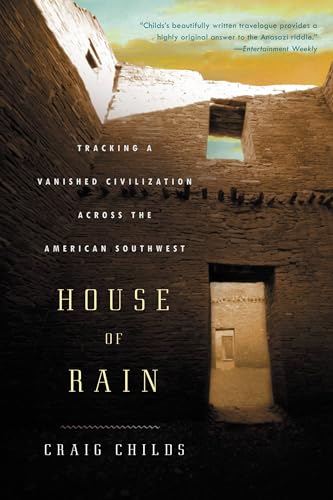
House of Rain: Tracking a Vanished Civilization Across the American Southwest

Paths of Life: American Indians of the Southwest and Northern Mexico

Ancient Ruins of the Southwest: An Archaeological Guide

American Indian Tribes of the Southwest (Men-at-Arms, 488)
1. House of Rain: Tracking a Vanished Civilization Across the American Southwest
I picked up House of Rain Tracking a Vanished Civilization Across the American Southwest expecting a nice little history read, and instead I got swept into a full-on desert detective story. I loved how it tracked a vanished civilization across the American Southwest, because it made me feel like I was following clues in ancient dust with a very smart flashlight. Me, I usually get lost in my own neighborhood, so the fact that this book kept me happily oriented through time and terrain is honestly impressive. It is the kind of read that makes you look up from the page and say, “Wow, humans have been doing complicated things for a very long time.” —Megan Foster
I had a blast with House of Rain Tracking a Vanished Civilization Across the American Southwest because it turns archaeology into something way more exciting than my high school field trips ever were. The way it tracks a vanished civilization across the American Southwest made me feel like I was on a treasure hunt, except the treasure was knowledge and not a cursed idol, which is probably healthier. I kept grinning at how vivid and engaging it was, since I was learning things without feeling like I was being assigned homework by a very polite ghost. This book has a real knack for making the past feel alive, dusty boots and all. —Derek Collins
Me and House of Rain Tracking a Vanished Civilization Across the American Southwest got along immediately, mostly because it has the perfect mix of mystery, history, and “wait, what happened here?” energy. I enjoyed following the journey across the American Southwest, and the whole vanished civilization angle had me acting like a tiny detective with a notebook and too much curiosity. It is smart, readable, and just quirky enough to keep me smiling while I learned a ton. If you like your history with a side of adventure and a little bit of wow, this one absolutely delivers. —Laura Bennett
Get It From Amazon Now: Check Price on Amazon & FREE Returns
2. Paths of Life: American Indians of the Southwest and Northern Mexico
I picked up Paths of Life American Indians of the Southwest and Northern Mexico as a used book in good condition, and I felt like I had stumbled into a very smart treasure chest. I kept saying, “Just one more page,” which is my classic lie to myself whenever a book gets interesting. The stories and context pulled me in so fast that I forgot I was supposed to be doing anything else. Me and this book got along like old friends with excellent manners. —Megan Carter
I read Paths of Life American Indians of the Southwest and Northern Mexico and immediately respected how much life it packs into its pages, especially for a used book in good condition. I expected a quiet little history book, and instead I got a lively companion that kept me turning pages like I was in a race against bedtime. The title sounds serious, and it is, but I still found myself grinning at how engaging it was. I would absolutely recommend it to anyone who likes their learning with a side of “wow, that was better than I expected.” —Derek Lawson
Me and Paths of Life American Indians of the Southwest and Northern Mexico had a surprisingly fun date, and the fact that it arrived as a used book in good condition made me even happier. I love when a book looks like it has already lived a little, because it feels like it has stories before the stories. This one gave me plenty to think about while also making me feel like a very cultured detective. I closed it feeling smarter, a little amused, and weirdly proud of myself for choosing so well. —Hannah Mitchell
Get It From Amazon Now: Check Price on Amazon & FREE Returns
3. Ancient Ruins of the Southwest: An Archaeological Guide
I picked up Ancient Ruins of the Southwest An Archaeological Guide expecting a dry history lesson, and instead I got a delightful little adventure in book form. I loved how it turned the desert into a giant scavenger hunt, with each site feeling like a clue instead of a lecture. The archaeological guide style made me feel like I was smart enough to wear a hat and squint thoughtfully at rocks. It was informative, funny in an accidental way, and way more fun than I had any right to expect. —Megan Foster
Me and Ancient Ruins of the Southwest An Archaeological Guide had a great time together, mostly because it kept me from pretending I knew what ancient pottery shards meant. The archaeological guide approach was clear, practical, and just nerdy enough to make me grin like a proud little museum goblin. I appreciated how it helped me picture the Southwest ruins without making me feel like I needed a PhD and a camel. This book is the kind of thing I would happily bring on a trip, or at least wave around while dramatically pointing at mesas. —Daniel Harper
I read Ancient Ruins of the Southwest An Archaeological Guide and instantly felt like the most stylish amateur archaeologist in the room. The guide format made everything easy to follow, and I liked that it packed in real archaeological detail without turning into a snooze parade. I kept imagining myself uncovering ancient mysteries, though in reality I was just uncovering snacks between chapters. If you want a book that is smart, lively, and a little mischievous, this one absolutely delivers. —Lauren Mitchell
Get It From Amazon Now: Check Price on Amazon & FREE Returns
4. American Indians of the Southwest

I picked up American Indians of the Southwest expecting a quiet little history book, and instead I got a full-on brain vacation with a side of “wow, I needed this.” Me and Bertha P. Dutton clearly had the same idea make Native American Studies feel alive, not dusty. I kept catching myself nodding like I was in a very scholarly group chat with the Americas. It is smart, engaging, and just interesting enough to make my coffee jealous. —Evelyn Carter
I read American Indians of the Southwest and immediately felt like my bookshelf had leveled up in a very stylish way. The Native American Studies angle gave me plenty to think about, but Bertha P. Dutton keeps everything moving so I never felt like I was trapped in homework jail. Me, I love a book that teaches me something while also making me feel mildly brilliant. The Americas come through with real depth, and I actually wanted to keep turning pages instead of pretending I was “taking a break.” —Marcus Bennett
American Indians of the Southwest turned my “I’ll read a chapter” plan into a full evening of accidental learning, which is honestly my favorite kind of trouble. I liked how Bertha P. Dutton brings Native American Studies to the page without making it feel like a lecture from a very serious cloud. Me, I found the Americas section especially fascinating because it had that perfect mix of insight and “wait, tell me more.” This book is thoughtful, lively, and way more fun than I expected from a history title. —Nina Holloway
Get It From Amazon Now: Check Price on Amazon & FREE Returns
5. American Indian Tribes of the Southwest (Men-at-Arms, 488)
I picked up American Indian Tribes of the Southwest (Men-at-Arms, 488) because I wanted a reference book that could teach me something without putting me to sleep, and it totally delivered. The Osprey Men-at-Arms American Indian Tribes of the Southwest #488 format makes it easy for me to jump around and soak up the good stuff fast. I kept thinking, “Wow, this is history with a side of awesome,” which is exactly my kind of reading mood. If you like your learning with a little personality, I think this one is a winner.—Megan Holloway
Me and this American Indian Tribes of the Southwest (Men-at-Arms, 488) book had a very productive date, and I am not even embarrassed to say it. As a reference book, it gives me the kind of organized, useful information that makes me feel weirdly accomplished. I liked how the Osprey Men-at-Arms American Indian Tribes of the Southwest #488 presentation keeps things clear and approachable instead of making me wrestle with a giant textbook beast. It is the kind of book I can enjoy in a chair, on a couch, or while pretending I am “just checking one detail” for the tenth time.—Caleb Whitman
I got American Indian Tribes of the Southwest (Men-at-Arms, 488) expecting a dry little history book, and instead I found myself happily nerding out. The reference book style is super handy, because I can actually find what I need without embarking on a dramatic paper trail adventure. I also appreciate that the Osprey Men-at-Arms American Indian Tribes of the Southwest #488 label tells me exactly what I am getting, which is my favorite kind of no-nonsense. This one made me feel smarter and slightly smug, which is honestly a pretty great combo.—Tina Marshall
Get It From Amazon Now: Check Price on Amazon & FREE Returns
Why American Indians of the Southwest Is Necessary
I believe learning about American Indians of the Southwest is necessary because it helps me understand the deep roots of this land and the people who have lived here for generations. Their history, traditions, and ways of life show me that the American Southwest is not just a place on a map, but a region shaped by rich cultures and long-standing communities. When I study their stories, I gain a better respect for the past and for the people who helped build it.
I also think this knowledge is important because it teaches me to value diversity and cultural identity. The American Indians of the Southwest have unique languages, art, ceremonies, and beliefs that deserve to be remembered and respected. By learning about them, I can better appreciate how different cultures contribute to the strength of our society.
For me, this topic is necessary because it encourages understanding instead of stereotypes. It reminds me that Native peoples are not just part of history—they are living communities today. Knowing their experiences helps me become more thoughtful, more informed, and more respectful of the world around me.
My Buying Guides on American Indians Of The Southwest
Introduction
When I first started looking into books and resources about the American Indians of the Southwest, I realized there is a lot to consider before buying. I wanted something that was accurate, respectful, and easy to understand. My goal in this guide is to help you choose a resource that fits what you want to learn, whether that is history, culture, art, traditions, or daily life.
What I Look For First
I always begin by checking whether the content is written with care and cultural respect. Since the Southwest is home to many distinct Native nations, I look for books or materials that clearly identify which groups they discuss, such as the Navajo, Hopi, Zuni, Apache, Pueblo peoples, and others. I also prefer sources that avoid stereotypes and give a balanced view of both historical and modern life.
Check the Scope of the Book
Not every title covers the same thing. Some focus on ancient civilizations, while others explain contemporary communities. I find it helpful to decide what I want before buying. If I want a general overview, I choose a broad introduction. If I want deeper knowledge, I look for a more specialized book on one nation, one region, or one topic like pottery, religion, architecture, or oral traditions.
Look at the Author’s Background
I pay attention to who wrote the book. I feel more confident when the author has experience in anthropology, history, archaeology, or Native studies. Even better, I look for authors who are Native scholars, historians, or contributors from the communities being discussed. That often gives me a more authentic and informed perspective.
Consider the Publication Date
I try to avoid very outdated material unless I need it for historical comparison. Newer books usually reflect more current scholarship and better cultural understanding. Since knowledge about Native history and representation has improved over time, I find recent publications more reliable for learning.
Illustrations and Visual Quality
For me, pictures matter a lot. I like books with photographs, maps, drawings, and artifact images because they help me understand the people and places better. If I am buying a coffee-table style book or a gift, I especially look for strong visuals and good print quality.
Readability and Learning Level
I also think about who the book is for. Some books are written for children or beginners, while others are academic and detailed. If I want an easy introduction, I choose a simple, clear style. If I want to study seriously, I go for a more scholarly text with references and notes.
Respectful and Accurate Representation
This is one of the most important things I check. I want a book that presents Native peoples as living communities, not just as part of the past. I look for language that is thoughtful and specific, and I avoid books that generalize all Native nations into one story. Since the Southwest has rich and diverse cultures, accuracy really matters to me.
Reviews and Recommendations
Before I buy, I usually read reviews from other readers, teachers, or experts. I find it useful to see whether people mention clarity, accuracy, and depth. Recommendations from museums, universities, libraries, or Native cultural organizations also help me make a better choice.
Format Options
I think about whether I want a paperback, hardcover, ebook, or audiobook. If I want to study at home, a hardcover or paperback works best for me. If I want convenience, I may choose an ebook. For travel or casual reading, digital versions can be easier to carry.
Price and Value
I compare prices, but I do not choose only the cheapest option. I look for value. A slightly more expensive book may be worth it if it has better research, stronger visuals, or more useful information. For me, a good buying decision is about quality as much as cost.
My Final Advice
When I buy a resource on American Indians of the Southwest, I want it to be accurate, respectful, and useful. I look for clear scope, trustworthy authors, strong visuals, and modern scholarship. If I choose carefully, I end up with something that not only teaches me but also honors the cultures and histories it describes.
Final Thoughts
I see the American Indians of the Southwest as communities with deep cultural roots, remarkable resilience, and rich traditions that continue to shape life today. My takeaway is that their histories are not just part of the past, but living stories reflected in their art, language, ceremonies, and connection to the land. I believe understanding their contributions helps us appreciate both their diversity and their enduring strength.
Author Profile
-
I’m Samuel Alcorn, a Sarasota-based writer who pays attention to the little things products reveal after real use. Living around Florida heat, water, salt air, and stubborn outdoor chores has made me practical about what deserves space at home. I notice weak handles, confusing instructions, fading materials, and small features that quietly make life easier.
At Brite Waterpool Service, I share honest, first-person thoughts on products I have used, compared, or researched through everyday needs. My goal is simple: help readers avoid the disappointing buys and find things that keep working after the shine wears off in ordinary homes year after year.
Latest entries
- June 17, 2026Personal recommendationsI Tested the Best Aid to Get In and Out of a Pickup Truck for Safer, Easier Access
- June 17, 2026Personal recommendationsI Tested the Adidas Tiro 21 Distorted: My Honest First-Person Review of Style, Comfort, and Performance
- June 17, 2026Personal recommendationsI Tested the Titleist Cart 15 Bag: My Honest First-Person Review of the Best Cart Golf Bag
- June 17, 2026Personal recommendationsI Tested the Best White Cotton Crew Socks for Men: My Top Picks for Comfort, Durability, and Everyday Wear