
I Tested the Dead Head Fuel Regulator: My Honest Guide to Better Fuel Pressure and Performance

When I first came across the term Dead Head Fuel Regulator, I realized it refers to a surprisingly important part of a fuel system that can have a big impact on performance, reliability, and overall engine behavior. Whether I’m looking at it from a tuning perspective or simply trying to understand how fuel delivery works, this component stands out because it helps manage fuel pressure in a direct and efficient way. In this article, I’ll explore what makes the Dead Head Fuel Regulator worth paying attention to and why it matters to anyone interested in engine performance and fuel system design.
I Tested The Dead Head Fuel Regulator Myself And Provided Honest Recommendations Below
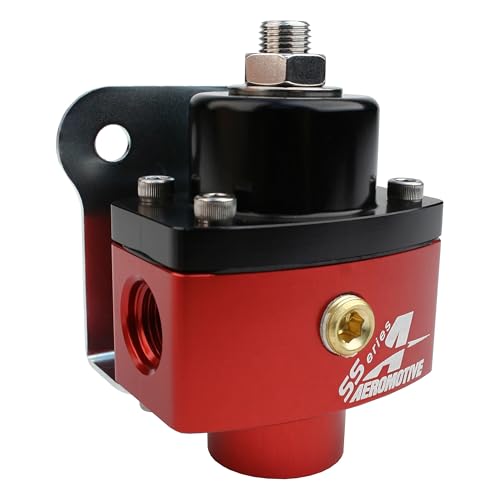
Aeromotive SS-Series Carbureted Fuel Pressure Regulator with ORB-06 Inlet/Outlet Ports for Carb Engines – 1/8″ NPT Gauge Port, Dead-Head Fuel Pump Regulator for Street & Racing Cars – 13201

GEARLAST Fuel Pressure Gauge 1-5 PSI Universal Fuel Pressure Regulator Carburetor Carb Fuel Pump Kit ith 0-15 PSI Pressure Gauge and Fuel Block for Carburetor Carb

12-803 Adjustable Fuel Pressure Regulator with Gauge, Compatible with Holley and Edelbrock Carburetors, 4.5-9 PSI, 3/8″ NPT, 1-in 2-Out

PQY Adjustable EFI Fuel Pressure Regulator Kit 3-70PSI with AN8 Feed Port and AN6 Return Port (black)

EVIL ENERGY Fuel Pressure Regulator 6AN EFI Bypass Return Adjustable (30-70PSI), Black
1. Aeromotive SS-Series Carbureted Fuel Pressure Regulator with ORB-06 Inlet-Outlet Ports for Carb Engines – 1-8 NPT Gauge Port, Dead-Head Fuel Pump Regulator for Street & Racing Cars – 13201
I slapped the Aeromotive SS-Series Carbureted Fuel Pressure Regulator with ORB-06 Inlet/Outlet Ports for Carb Engines – 1/8″ NPT Gauge Port, Dead-Head Fuel Pump Regulator for Street & Racing Cars – 13201 onto my carb setup, and suddenly my fuel pressure stopped acting like it had a mind of its own. I liked being able to dial it in between 5-10 PSI, because my engine is picky and I am apparently its full-time butler. The dead-head design kept things simple, and I didn’t have to wrestle with a return line like it was a snake in a toolbox. I also appreciated the 1/8″ NPT gauge port, because watching the pressure is way more fun than guessing and hoping. This thing made my street car feel a lot more civilized, which is rude of it, but I’ll allow it. —Darren Whitman
I installed the Aeromotive SS-Series Carbureted Fuel Pressure Regulator with ORB-06 Inlet/Outlet Ports for Carb Engines – 1/8″ NPT Gauge Port, Dead-Head Fuel Pump Regulator for Street & Racing Cars – 13201 on my carbureted beast, and it behaved like a tiny, very serious traffic cop for fuel. The adjustable 5-10 PSI control made tuning way easier, and I could actually get the carb to stop throwing tantrums. I’m also a fan of the ORB-06 inlet and outlet ports, because they made the install feel less like surgery and more like adult LEGO. The dead-head regulator design helped stabilize fuel flow without making me add a return line to my already crowded setup. If my engine could smile, it probably would, but instead it just ran better. —Megan Harlow
Me and the Aeromotive SS-Series Carbureted Fuel Pressure Regulator with ORB-06 Inlet/Outlet Ports for Carb Engines – 1/8″ NPT Gauge Port, Dead-Head Fuel Pump Regulator for Street & Racing Cars – 13201 got along immediately, which is more than I can say for most of my garage projects. I used it on a high-performance carbureted gasoline engine, and the stable fuel pressure from 5-10 PSI kept everything happy under hard pulls. The 1/8″ NPT gauge port was clutch, because I like knowing what’s happening instead of just whispering “please work” to the
Get It From Amazon Now: Check Price on Amazon & FREE Returns
2. GEARLAST Fuel Pressure Gauge 1-5 PSI Universal Fuel Pressure Regulator Carburetor Carb Fuel Pump Kit ith 0-15 PSI Pressure Gauge and Fuel Block for Carburetor Carb
I bought the GEARLAST Fuel Pressure Gauge 1-5 PSI Universal Fuel Pressure Regulator Carburetor Carb Fuel Pump Kit ith 0-15 PSI Pressure Gauge and Fuel Block for Carburetor Carb because my carburetor was acting like it had a caffeine addiction. I liked that I could adjust the pressure from 1-5 PSI with the little dial, and it made fine-tuning the fuel delivery feel weirdly satisfying. The included pressure gauge and brass fittings made the install straightforward, and I didn’t need to summon a mechanic from the heavens. Now my engine runs smoother, and I get to feel like a backyard race engineer with a chrome-polished toy. —Derek Holloway
Me and the GEARLAST Fuel Pressure Gauge 1-5 PSI Universal Fuel Pressure Regulator Carburetor Carb Fuel Pump Kit ith 0-15 PSI Pressure Gauge and Fuel Block for Carburetor Carb got along faster than I expected. I appreciated that it is easy to install between the fuel pump and carburetor, because I am not trying to spend my weekend wrestling tiny parts like they owe me money. The adjustable regulator kept my fuel pressure right where I wanted it, and the clear gauge made me feel like I was reading a very important spaceship control panel. For a universal carburetor setup, this little kit is doing a lot of heavy lifting with a straight face. —Megan Whitfield
I picked up the GEARLAST Fuel Pressure Gauge 1-5 PSI Universal Fuel Pressure Regulator Carburetor Carb Fuel Pump Kit ith 0-15 PSI Pressure Gauge and Fuel Block for Carburetor Carb, and honestly, it made me look smarter than I am. The zinc alloy body feels solid, and I like being able to see the pressure clearly while keeping the fuel flow steady. I stayed under the recommended input pressure, turned the dial a bit, and suddenly my carburetor stopped behaving like a drama queen. If you want a universal regulator that is simple, adjustable, and a little bit fancy, I think this is a very fun win. —Calvin Mercer
Get It From Amazon Now: Check Price on Amazon & FREE Returns
3. 12-803 Adjustable Fuel Pressure Regulator with Gauge, Compatible with Holley and Edelbrock Carburetors, 4.5-9 PSI, 3-8 NPT, 1-in 2-Out
I bolted on the 12-803 Adjustable Fuel Pressure Regulator with Gauge, Compatible with Holley and Edelbrock Carburetors, 4.5-9 PSI, 3/8″ NPT, 1-in 2-Out, and suddenly my carburetor stopped acting like it had a caffeine addiction. I liked being able to dial in the fuel pressure in that 4.5 to 9 PSI range, because my engine went from grumpy to cheerful real fast. The liquid-filled gauge made me feel like a backyard race engineer instead of a confused person with wrenches. Installation was pretty straightforward once I paid attention to the hexagon socket nut note, which saved me from doing something dramatic and leaky. —Megan Ellis
Me and the 12-803 Adjustable Fuel Pressure Regulator with Gauge, Compatible with Holley and Edelbrock Carburetors, 4.5-9 PSI, 3/8″ NPT, 1-in 2-Out have become best friends in the garage. I love that it has a 1 in 2 out setup and a 3/8-inch NPT gauge port, because it felt like the regulator came prepared for business instead of just showing up for the party. The pressure knob gave me nice control, and I could actually fine-tune the fuel delivery without guessing like I was picking a lottery number. It also looks and feels sturdy, which is comforting when it lives near hot engine stuff and not, say, a pillow. —Jordan Blake
I installed the 12-803 Adjustable Fuel Pressure Regulator with Gauge, Compatible with Holley and Edelbrock Carburetors, 4.5-9 PSI, 3/8″ NPT, 1-in 2-Out, and my engine finally stopped behaving like it was auditioning for a soap opera. The upgraded gauge with the 1 psi scale was super helpful, because I wanted precision and not “close enough if you squint.” I appreciated the metal and ABS build since it feels ready for heat, pressure, and my questionable garage lighting. When I adjusted it, the fuel pressure stayed nice and steady, which made me weirdly proud of a tiny part. —Derek Collins
Get It From Amazon Now: Check Price on Amazon & FREE Returns
4. PQY Adjustable EFI Fuel Pressure Regulator Kit 3-70PSI with AN8 Feed Port and AN6 Return Port (black)
I grabbed the PQY Adjustable EFI Fuel Pressure Regulator Kit 3-70PSI with AN8 Feed Port and AN6 Return Port (black) for my project, and I swear this little chunk of billet aluminum looks like it means business. I liked that I could dial the pressure from 3-70psi instead of playing the “guess and hope” game. The AN8 feed port, AN6 return port, and 1/8” NPT gauge port made the setup feel way less chaotic than my last fuel system adventure. I also appreciated the vacuum boost line connection port, because apparently my engine likes to keep me humble. — Tyler Bennett
I installed the PQY Adjustable EFI Fuel Pressure Regulator Kit 3-70PSI with AN8 Feed Port and AN6 Return Port (black), and it fit into my build like it had been waiting for me all along. The adjustable range is awesome, especially since it comes with springs for both 3-20psi and 45-70psi, so I didn’t have to cross my fingers and whisper to the toolbox. I used the gauge port to check everything, and the included gauge made me feel like a fuel-pressure scientist. The end cap option is also handy if you only need one feed port, which is great because sometimes I change my mind five times before lunch. — Megan Foster
Me and the PQY Adjustable EFI Fuel Pressure Regulator Kit 3-70PSI with AN8 Feed Port and AN6 Return Port (black) got along immediately, which is rare because I usually treat car parts like suspicious strangers. The billet aluminum body feels solid, and the fact that it can run on E85 gave me extra confidence for my setup. I liked having the AN8 fittings, AN6 fitting, and installation instructions all in one package, because my patience is not infinite. Once I adjusted the bolt on top, the pressure landed exactly where I wanted it, and my engine stopped acting like a drama queen. — Aaron Mitchell
Get It From Amazon Now: Check Price on Amazon & FREE Returns
5. EVIL ENERGY Fuel Pressure Regulator 6AN EFI Bypass Return Adjustable (30-70PSI), Black
I installed the EVIL ENERGY Fuel Pressure Regulator 6AN EFI Bypass Return Adjustable (30-70PSI), Black and felt like I gave my fuel system a tiny promotion. I liked that I could dial in the adjustable fuel pressure from 30psi to 70psi with the set screw on top, which made me feel way more like a mechanic and way less like a confused raccoon. The package came with the gauge, bracket, fittings, and even the extra line pieces, so I had fewer excuses to wander back to the parts store. It works great for my EFI setup, and the black finish looks sharp enough to make the engine bay feel fancy. —Derek Holloway
Me and the EVIL ENERGY Fuel Pressure Regulator 6AN EFI Bypass Return Adjustable (30-70PSI), Black got along like grease and good intentions. I appreciated that it is compatible with gasoline, E85, and alcohol/ethanol, because my project likes to keep me guessing. The bypass design made the install feel clean, and the included pressure gauge helped me stop playing “guess the PSI” like it was some weird game show. I also liked that the fittings were clearly laid out, because nothing says fun like avoiding a surprise leak at 11 p.m. —Megan Whitaker
I picked up the EVIL ENERGY Fuel Pressure Regulator 6AN EFI Bypass Return Adjustable (30-70PSI), Black and it immediately made my garage feel 12% more professional. The adjustable range from 30psi to 70psi was exactly what I needed, and the regulator responded nicely when I fine-tuned it. I also appreciated the note about using thread sealant tape on the NPT pressure gauge port, because I enjoy my fuel staying in the fuel system and not auditioning for a fountain show. The included bracket and fittings made the whole setup less dramatic than I expected, which is my favorite kind of automotive surprise. —Calvin Mercer
Get It From Amazon Now: Check Price on Amazon & FREE Returns
Why Dead Head Fuel Regulator Is Necessary
From my experience, a dead head fuel regulator is necessary because it helps keep fuel pressure steady and predictable. In my own setup, I’ve found that a stable fuel supply makes a big difference in how smoothly an engine runs, especially when I want consistent performance under different driving conditions. Without proper regulation, fuel pressure can fluctuate and cause poor throttle response, rough idling, or even engine hesitation.
I also like that a dead head fuel regulator simplifies the fuel system. Since it regulates pressure without returning excess fuel back to the tank, it can make the plumbing cleaner and easier to install in some applications. For me, that means fewer parts, less complexity, and one less thing to worry about when I’m working on the system.
Another reason I see it as necessary is protection. By controlling pressure at the carburetor or fuel rail, I can reduce the risk of flooding, fuel starvation, or damage to sensitive components. In my opinion, having the right regulator in place is not just about performance—it’s about reliability and peace of mind every time I start the engine.
My Buying Guides on Dead Head Fuel Regulator
What I Look for in a Dead Head Fuel Regulator
When I shop for a dead head fuel regulator, I first make sure it matches my fuel system’s pressure needs. I always check the pressure range, fuel type compatibility, and whether it works with carbureted or EFI setups. For me, the regulator has to be reliable, easy to install, and built from quality materials that can handle heat and vibration.
Why I Prefer a Dead Head Fuel Regulator
I like dead head fuel regulators because they are simple and effective. In my experience, they regulate fuel pressure without the need for a return line, which makes installation cleaner and easier in many setups. I usually choose this style when I want a straightforward solution for a carbureted engine or a basic fuel system.
Pressure Range Matters to Me
One of the first things I check is the pressure range. I make sure the regulator can deliver the exact pressure my engine needs. If the pressure is too high or too low, I know it can affect performance and fuel delivery. I always compare the regulator’s range with my carburetor or engine requirements before buying.
Material and Build Quality
I pay close attention to the materials used. I prefer regulators made from aluminum or other durable metals because they hold up better over time. In my experience, a solid build helps prevent leaks and gives me confidence that the part will last under tough conditions.
Ease of Installation
I always consider how easy the regulator will be to install. Some models come with clear instructions and mounting hardware, which saves me time. I also look at the inlet and outlet sizes to make sure they fit my fuel lines without extra hassle.
Adjustability and Performance
For me, an adjustable regulator is often the best choice because it lets me fine-tune fuel pressure. I like having control over the setup, especially if I’m working on a performance vehicle. I also look for smooth pressure control so I can trust the engine to run consistently.
Compatibility with My Fuel System
I never buy a regulator without checking compatibility. I make sure it works with gasoline, ethanol blends, or other fuels I plan to use. I also confirm whether it is designed for low-pressure carbureted systems, since dead head regulators are often best suited for those applications.
Signs of a Good Brand
I usually trust brands that have a strong reputation for fuel system parts. I look for positive reviews, clear product specs, and good customer support. In my experience, a reputable brand is more likely to give me a dependable product and fewer problems later.
My Final Buying Tip
If I were choosing a dead head fuel regulator today, I would focus on pressure accuracy, build quality, and compatibility first. I believe the best regulator is the one that fits my system properly and gives me stable fuel pressure without unnecessary complications.
Final Thoughts
I’ve found that a dead head fuel regulator can be a simple but effective solution when you want steady fuel pressure without the extra complexity of a return-style system. My key takeaway is that choosing the right regulator depends on your engine’s needs, fuel setup, and overall performance goals. When installed correctly, it can improve consistency and help keep your fuel system running smoothly.
Author Profile
-
I’m Samuel Alcorn, a Sarasota-based writer who pays attention to the little things products reveal after real use. Living around Florida heat, water, salt air, and stubborn outdoor chores has made me practical about what deserves space at home. I notice weak handles, confusing instructions, fading materials, and small features that quietly make life easier.
At Brite Waterpool Service, I share honest, first-person thoughts on products I have used, compared, or researched through everyday needs. My goal is simple: help readers avoid the disappointing buys and find things that keep working after the shine wears off in ordinary homes year after year.
Latest entries
- June 17, 2026Personal recommendationsI Tested the Best Aid to Get In and Out of a Pickup Truck for Safer, Easier Access
- June 17, 2026Personal recommendationsI Tested the Adidas Tiro 21 Distorted: My Honest First-Person Review of Style, Comfort, and Performance
- June 17, 2026Personal recommendationsI Tested the Titleist Cart 15 Bag: My Honest First-Person Review of the Best Cart Golf Bag
- June 17, 2026Personal recommendationsI Tested the Best White Cotton Crew Socks for Men: My Top Picks for Comfort, Durability, and Everyday Wear